
Ever get home from a big hike and are sore in muscles that you didn’t even know you had? Been there! While you are learning how to walk again, you might as well learn about the muscles that just powered your through your adventure too.
I present to you: the muscles used while hiking! (along with a bit about what they do and how it applies to hiking). Next time, you can be sore in muscles that you do know you have!
Why is this important? Learning which muscles are powering your hike can help you understand fatigue, improve your form, and prevent injuries!
Lower body muscles used while hiking
Quadriceps & Hamstrings
Quadriceps & Hamstrings — what do these muscles do?
The quadriceps are a group of four muscles at the front of your thigh. They’re responsible for:
- Straightening the knee
- Stabilizing the leg
The hamstrings are a group of three muscles at the back of your thigh and are responsible for:
- Bending the knee
- Pulling the leg back
Together, these two muscle groups control much of your leg movement and protect your knee joints from strain.
Own alterations and File: SVG_Human_With_All_Organs.svg by Madhero88, CC BY-SA 3.0 https://creativecommons.org/licenses/by-sa/3.0, via Wikimedia Commons
Quadriceps & Hamstrings — how are these muscles worked while hiking?
Uphill: With help from the glutes, the quadriceps help with upward propulsion (push you upwards), while the hamstrings contribute forward propulsion (push you forwards) as you pull your leg back through each step.
Downhill: The quadriceps act as a brake and control you descent through eccentric contractions. The hamstrings continue to support balance and stability while maintaining forward momentum.
Notes from the Field Lab: Hiking downhill is actually harder on your quadriceps because of the eccentric contractions. Eccentric contractions are when muscles lengthen under tension (i.e., the muscle is releasing but is working harder to control that release). Yep, here comes the “quad burn”.
Regardless of the direction you’re headed, these muscles play an important role in keeping your knees happy and your balance steady on rocks, roots, and uneven ground.
Glute Muscles
Glutes — what do these muscles do?
The glutes are made up of three main muscles:
- Gluteus maximus — provides power and hip extension
- Gluteus medius — stabilizes the pelvis and assists with side-to-side control
- Gluteus minimus — supports balance and lateral movement
Own alterations and File: SVG_Human_With_All_Organs.svg by Madhero88, CC BY-SA 3.0 https://creativecommons.org/licenses/by-sa/3.0, via Wikimedia Commons
Glutes — how are these muscles worked while hiking?
Uphill: The glutes provide the power to help the quadriceps with upward propulsion. Strong glute muscles will help prevent burning your legs out too early.
Downhill: The glutes work with the thighs to stabilize your descent, controlling your speed and protecting your knees.
These muscles are important for balance and control on uneven terrain. The glutes provide support as you shift your weight between your legs, and stabilize the pelvis to take stress off of the knee and ankle joints.
Calves & Shins
Calves & Shins — what do these muscles do?
The calf muscles make up the bulk of the lower leg and are responsible for:
- Pointing your toes down (plantar flexion)
- Assisting with bending the knee
The shin muscles, along the front of the lower leg, are responsible for:
- Pointing your toes up (dorsiflexion)
- Stabilizing the foot
The calf muscles attach to the Achilles tendon, which attaches to the heel bone. This allows the calf muscles to pull the heel up and push you forward. The shin muscles do the opposite: they pull your toes up as the foot comes back down, which prevents you from tripping over your toes as you walk.
Own alterations and File: SVG_Human_With_All_Organs.svg by Madhero88, CC BY-SA 3.0 https://creativecommons.org/licenses/by-sa/3.0, via Wikimedia Commons
Calves & Shins — how are these muscles worked while hiking?
Uphill: The calves push your body upwards by lifting the heel up, while also providing the power behind each step. You’ll definitely feel steep climbs in your calves, as your body relies on the calves to move upwards.
Downhill: The shins undergo eccentric contractions (lengthening under tension!) to prevent the foot from slapping down. They’re very active during the descent, as they are crucial for foot placement. The calves help with ankle stability.
These muscles aren’t just important for momentum, but also for balance and traction — the constant small adjustments your foot makes on roots, rocks, and slopes are handled by your lower leg muscles.
If these muscles help to prevent tripping over yourself, then I do not have these muscles.
Hip Flexors & Stabilizers
Hip Flexors & Stabilizers — what do these muscles do?
The hip flexors are muscles at the front of the hip and they are responsible for:
- Bending at the hip
- Lifting the knee up
- Moving the leg forward
The hip stabilizers are muscles around the hip joint and they are responsible for:
- Stabilizing the pelvis to keep your stride balanced
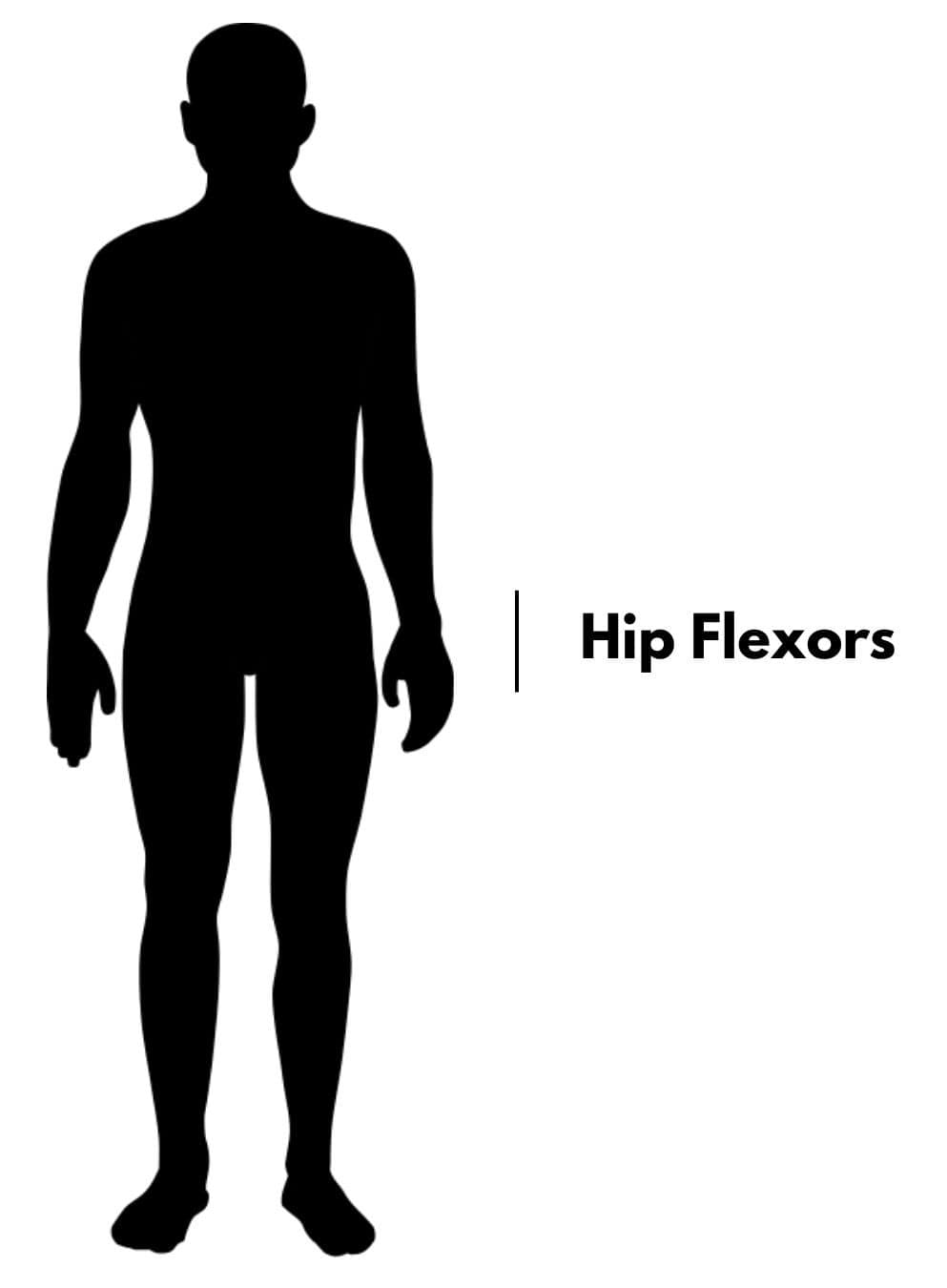
Own alterations and File: SVG_Human_With_All_Organs.svg by Madhero88, CC BY-SA 3.0 https://creativecommons.org/licenses/by-sa/3.0, via Wikimedia Commons
Hip Flexors & Stabilizers — how are these muscles worked while hiking?
Uphill: When you go to lift your knee, the hip flexors are the first muscles to activate. The hip flexors improve stride efficiency by helping to lift the leg.
Downhill: Hip flexors and hip stabilizers work together to control leg swing and to decelerate the leg as the foot lands, sort of like a built-in suspension system.
Not only are these muscles important for a steady stride, but they also absorb lateral forces, which improves balance and coordination.
Core muscles used while hiking
Core Muscles — what do these muscles do?
The core muscles are a group of muscles that wrap around your midsection:
- Rectus abdominis — the front muscle flexes the spine and allows for bending
- Obliques — the side muscles support twisting, turning, and side bending
- Transverse abdominis — the deep core muscle stabilizes your spine and pelvis
- Erector spinae — the muscles along the spine extend and support your back
Together, these muscles keep your torso and pelvis steady, help with balance and posture, and make sure your upper and lower body actually work as a team — essentially, the glue that keeps everything moving smoothly.
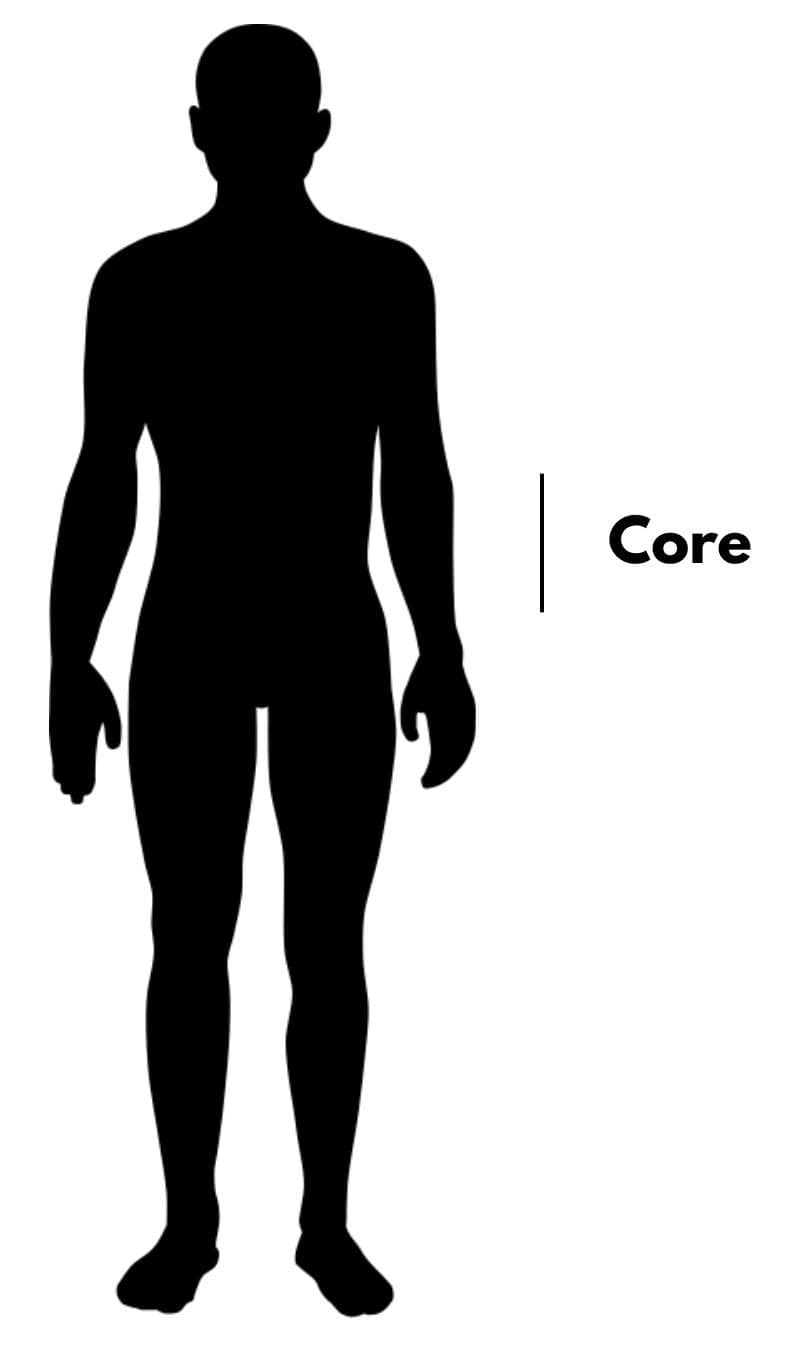
Own alterations and File: SVG_Human_With_All_Organs.svg by Madhero88, CC BY-SA 3.0 https://creativecommons.org/licenses/by-sa/3.0, via Wikimedia Commons
Core Muscles — how are these muscles worked while hiking?
Uphill: Your core engages to keep your torso upright and stable as you lean slightly forward on climbs. A strong core prevents your lower back from overworking and helps transfer power efficiently from your legs to your upper body.
Downhill: Core muscles act as stabilizers to control your body’s centre of gravity. They help keep your body from pitching forward and reduce impact on the lower back and knees.
On uneven terrain: The core is constantly active, even when you don’t realize it. Each step on rocks, roots, or slopes triggers small adjustments in your core to maintain balance and keep your spine aligned.
A strong, stable core doesn’t just protect your back — it improves overall hiking efficiency, reduces fatigue, and helps prevent injuries from slips or stumbles.
Upper body muscles used while hiking
Upper Body Muscles — what do these muscles do?
The main upper body muscles that chip in while hiking include:
- Latissimus dorsi — large back muscles that support posture and arm movement
- Trapezius and rhomboids — upper- and mid-back muscles that stabilize your shoulder blades and help you stand tall
- Deltoids — the shoulder muscles that lift and swing your arms
- Biceps and triceps — the front and back muscles of the upper arms that bend and extend the elbow
- Forearm muscles — the muscles that control your grip and wrist movement
These muscles support good posture on long hikes, help with balance by controlling arm swing, and reduce strain on your neck and shoulders when carrying a backpack.
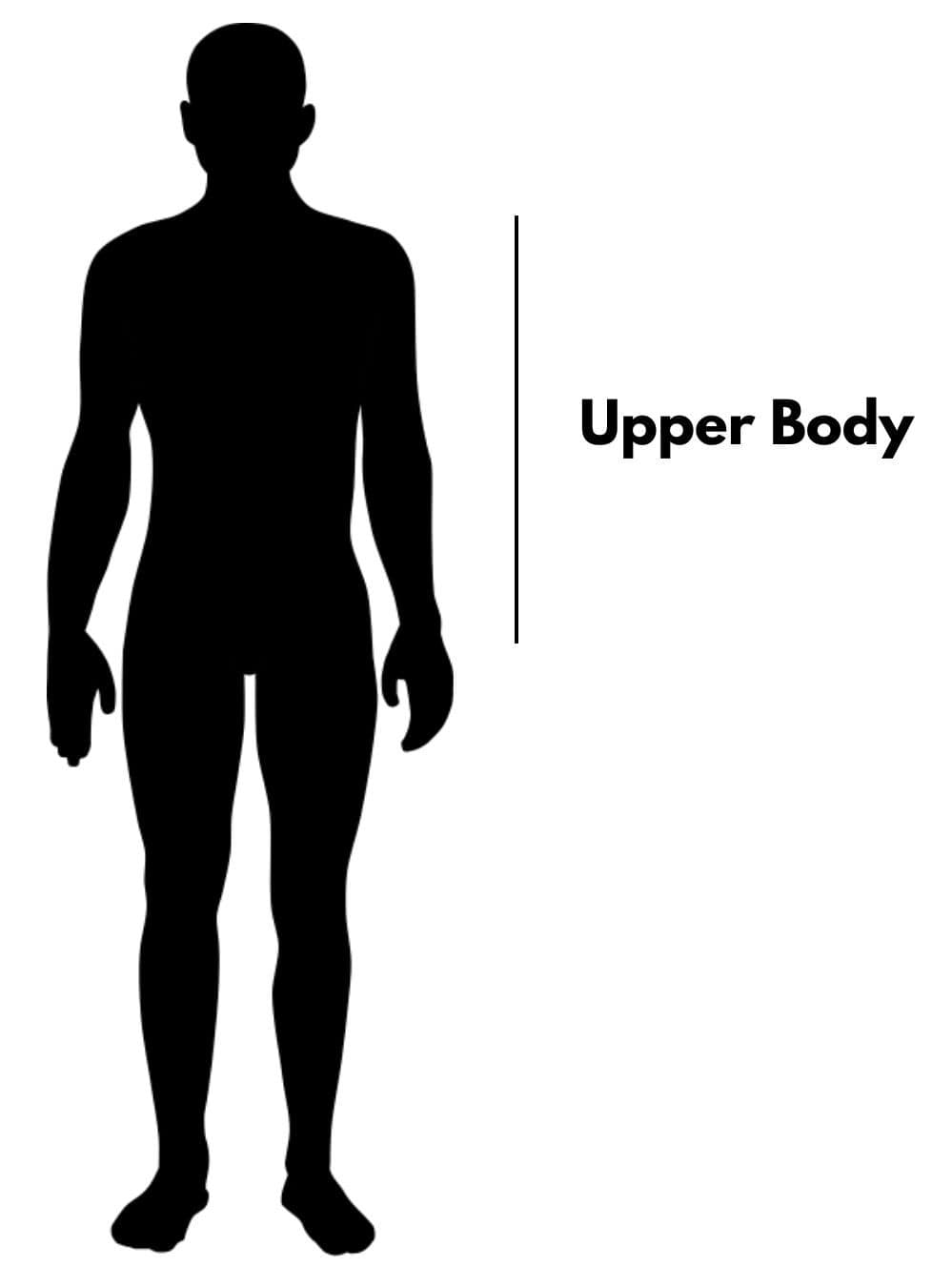
Own alterations and File: SVG_Human_With_All_Organs.svg by Madhero88, CC BY-SA 3.0 https://creativecommons.org/licenses/by-sa/3.0, via Wikimedia Commons
Upper Body Muscles — how are these muscles worked while hiking?
Using trekking poles: Each time you plant and push with your poles, your arms, shoulders, and back engage to help propel your body forward and upward. This takes some of the work off the legs, improving endurance.
Carrying a backpack: Your upper back and shoulder muscles work overtime to keep your posture strong and your backpack centred.
Balance and stability: Even without poles, swinging your arms helps to counterbalance your leg movements, especially on uneven terrain. Your shoulder and back muscles work with your core muscles to keep your torso steady and aligned.
Summary
So, what have we learned? Well, number one: it is amazing that there are all these muscles that support balance and coordination, and I am still falling down the hill.
Hiking is basically a full-body chain reaction. Your legs generate force, your core transfers it, and your upper body balances it out. When all three regions are working together, movement feels smoother, lighter, and more efficient.
Next time you’re out on the trail and questioning your life choices while your legs are burning, your arms are swinging, and your core feels like it’s holding your whole life together, at least now you can sound a little science-y to your friends.
Want more nerdy trail facts? Subscribe to The Trail Report — my weekly newsletter where we talk hiking, camping, stewardship, and all the ways to fall down a hill gracefully.


