
If you’ve ever wandered along a cold, clear mountain stream in Alberta and spotted a flash of silver dotted with pale spots? You may have just seen a bull trout! Read on to learn more about these Alberta natives and what you can do to help them prosper.
Quick Facts
- Common Name: Bull trout
- Scientific Name: Salvelinus confluentus
- Habitat: Mountain streams and rivers
- Diet: Carnivore — other fish, invertebrates, bugs
- Activity: Most active in the spring and fall
- Lifespan: 20 years
- Size: 30-80cm
- Status: At risk
- Fun Fact: Bull trout are the official fish of Alberta!
Where can you find bull trout in Alberta?
You can find bull trout in the Eastern Slopes, and in the river systems originating from there (including key watersheds like the Bow, Old Man, Athabasca, North Saskatchewan, and Peace). Bull trout prefer clear, cold water, and typically hang out in deep pools and backwater (i.e., away from the current). In Alberta, the healthiest populations are in protected areas like the national and provincial parks.
* Going fishing? In Alberta, bull trout are catch and release only!
How do you know if it’s a bull trout?
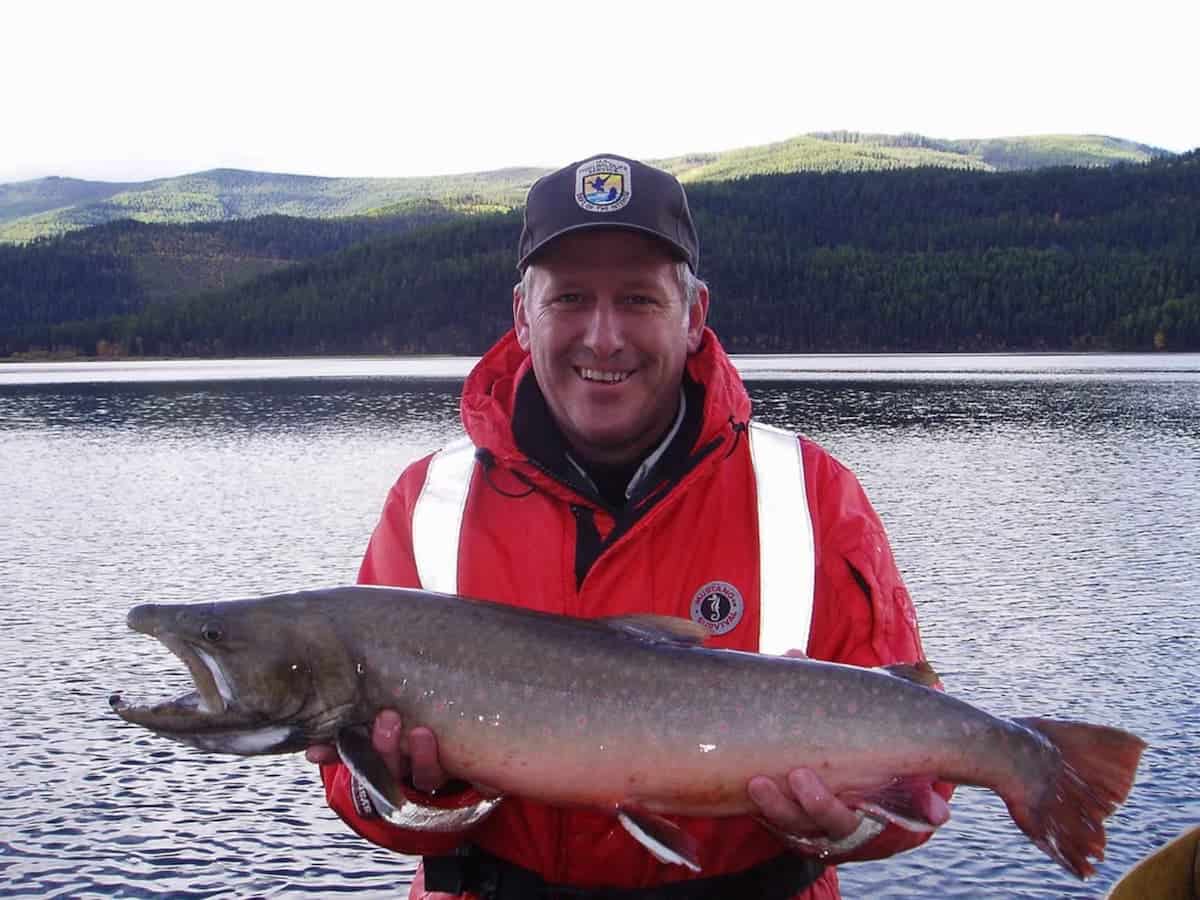
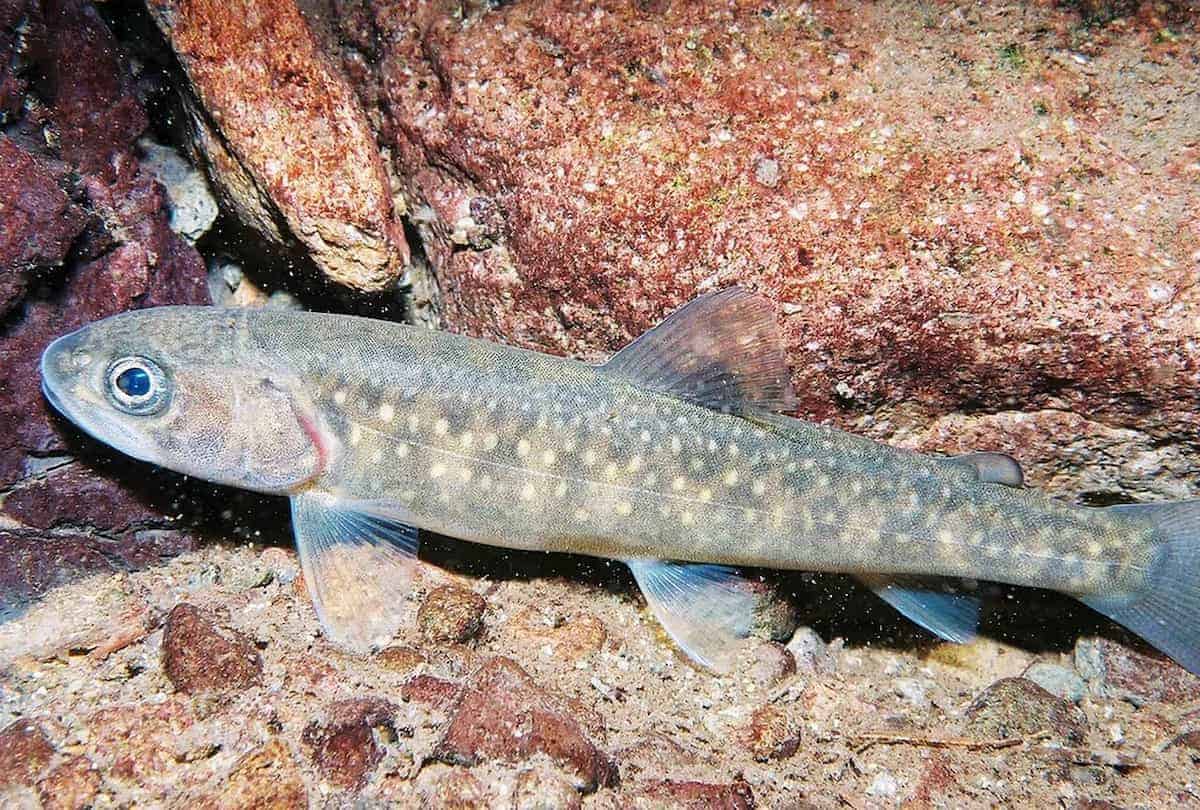
Bull trout typically grow to be 30-80cm, but the largest recorded was over a metre long! They are a grey-ish green or grey-ish blue, and are covered in light-coloured spots. There are no spots on the dorsal fin.
Check out this helpful identification guide from Parks Canada!
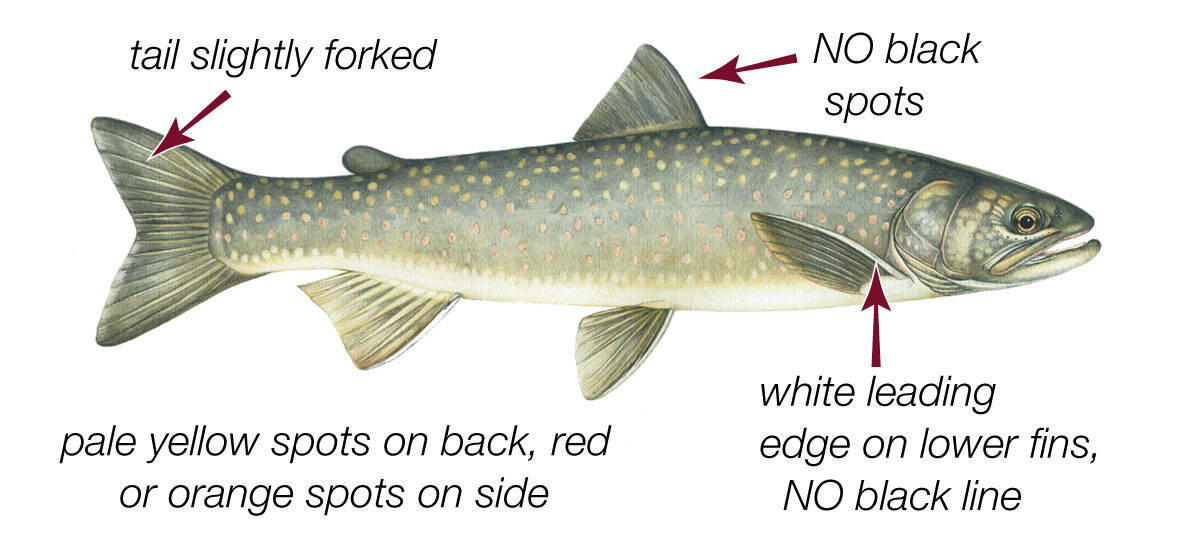
Identification Flowchart
- Does it have spots on its body? If yes, continue.
- Are these light coloured spots compared to the background? If yes, continue.
- Are there spots on its dorsal fin? If no, this is probably a bull trout!
Field notes: bull trout
Bull trout are actually a char (from the genus Salvelinus) and not a “true trout” (from the genus Oncorhynchus or Salmo).
In the fall, mature bull trout head upstream to spawn at the same place they were born. Migrating to a common spawning location helps to maintain genetic diversity.
Some bull trout may only travel a few kilometres upstream to spawn, some bull trout migrate hundreds of kilometres. The fish that migrate are bigger than the fish that live close to their spawning location.
The female digs a redd (a nest) for the eggs and a dominant male defends the eggs from other males. Some males (“sneakers”) mimic females, which allows them to fool the dominant male and get close enough to fertilize some of the eggs.
The fish hatch in the spring and spend the summer months swimming around looking for a cool place to live (which is why some of them end up travelling hundreds of kilometres and are the most naturally dispersed native fish species in Alberta).
Bull trout exist in one of four forms:
- Resident: These fish don’t migrate and spend their lives in the same location
- Fluvial: This form migrates to larger streams and rivers
- Adfluvial: This form migrates to lakes
- Anadromous (marine): These fish are born in freshwater, migrate to saltwater, and then head back to freshwater to spawn (like salmon)
- You won’t see this form in Alberta (because we have no ocean, lol)
Why do bull trout matter?
Bull trout are great indicators of ecosystem health because they require cold, clean, oxygen-rich water to survive. They are sensitive to pollutants and other environmental changes.
In the food chain, they are mid-level predators. This means that they prey on others but are also preyed on by others. Mid-level predators keep their prey populations in check while sustaining predators higher up the food chain.
Why are they at risk?
The Government of Alberta attributes it mainly to over-harvesting, but habitat degradation and invasive species also put bull trout at risk.
Historically, bull trout were seen as a nuisance by fishermen because they feed on other game fish and so harvesting was encouraged. Nowadays, bull trout are a protected species in Alberta and must be released if caught.
Bull trout are slow growers and don’t start spawning until 5-7 years of age. Not to mention that an individual fish might not spawn each year. This means it takes a longer time for the population to recover.
Bull trout are vulnerable to habitat fragmentation. Some bull trout live in isolated populations, which means that if something happens, they could be extirpated from that area for good.
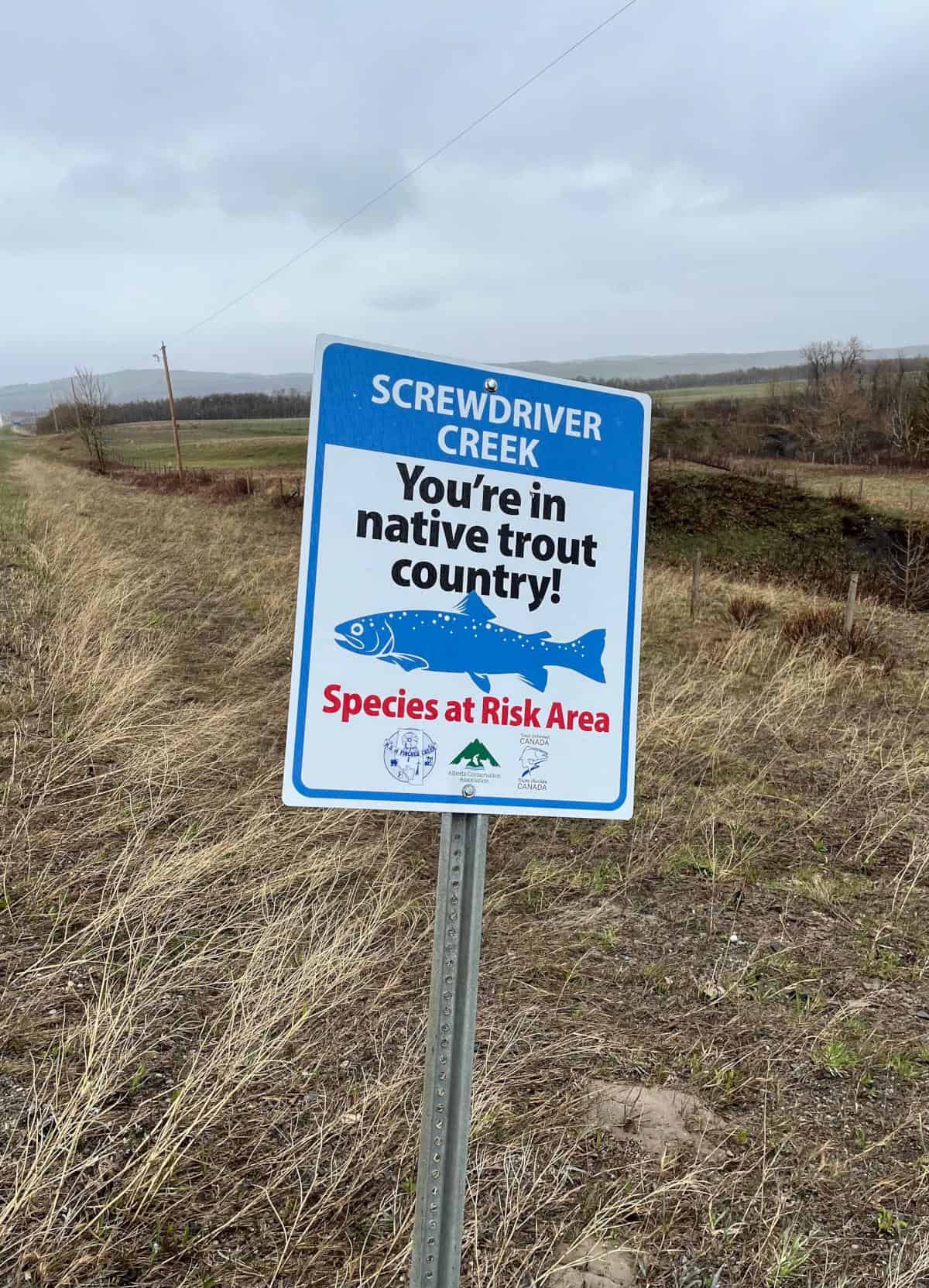
Bull trout — how to be a good neighbour!
- Keep waterways clean!
- Throw out trash, avoid getting soap or chemicals in the water
- Avoid disturbing spawning areas in the fall
- Volunteer with your local watershed stewardship group
- Land Stewardship Centre: click here to find stewardship groups in your area
- If you are fishing, make sure you are following Alberta fishing regulations
- Across the province, the possession limit for bull trout is zero — you must catch and release!
- Use barbless hooks and safe handling techniques
- Alberta Government: click here to read Alberta’s sportsfishing regulations
- Call in the heavies if you see anything troubling
- Report-a-Poacher: call 1-800-642-3800
- Public safety incidents, illegal activity, environmental or wildlife concerns: call 310-LAND (or 1-833-310-5689)

The mighty a bull trout — an icon of Alberta. Remember: a healthy bull trout population = a healthy ecosystem. By giving them space to spawn, practicing catch-and-release, and keeping streams clean, we can help to ensure these fish persist into the future.
Want to keep nerding out on nature with me? Consider signing up for my newsletter — The Trail Report!


